Reviewing Science Digital Papers Patterns for Embroidery
As a designer who spends more time staring at stitch simulations than actual fabric, I have learned to be skeptical of digital assets that promise versatility without delivering structural integrity. When I first opened the folder containing Science Digital Papers Patterns, my initial reaction was not just about the aesthetic appeal, but about the technical feasibility of translating these graphic elements into thread. For embroidery designers, small business owners, and Etsy sellers, the gap between a pretty PNG and a functional machine embroidery design is where profits are either made or lost.
The First Impression: Mood and Structural Personality
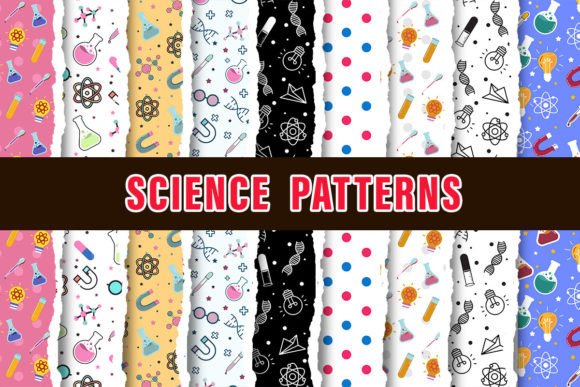
The visual personality of Science Digital Papers Patterns leans heavily into an intellectual, retro-modern aesthetic. We are talking about motifs that evoke laboratory notes, periodic table fragments, geometric molecular structures, and vintage blueprint textures. The mood is clean, precise, and slightly nostalgic. For a crafter or apparel decorator, this immediately signals a specific target audience: teachers, students, science enthusiasts, and parents looking for unique, non-generic gifts.
However, from a technical standpoint, the layout presents both opportunities and challenges. The detail level is high, which is fantastic for visual impact on large surfaces like tote bags or pillow covers, but it raises immediate questions about stitch density and clarity when scaled down. The shapes are largely linear and geometric, which suggests a heavy reliance on running stitch and fine satin stitch work rather than broad fill stitch areas. This is generally good news for production time, but it demands precision in digitizing to prevent thread breaks or puckering.
Real-World Application: The Custom Tote Bag Scenario
To truly evaluate Science Digital Papers Patterns, I mentally placed it onto a canvas tote bag project, a staple for any craft business. Imagine a natural, unbleached cotton canvas. The contrast of dark navy or charcoal thread against the light fabric would make the scientific diagrams pop. Here, the patterns function less as mere decoration and more as a statement piece. The linear nature of the designs allows them to sit flat on the textured surface of the canvas without creating excessive bulk.
If I were preparing this for a client, perhaps a university bookstore or a local science museum gift shop, the professionalism of the design adds significant perceived value. It does not look like a clip-art afterthought; it looks like a curated design asset. For an Etsy seller, this translates to higher buyer engagement because the product feels specialized. The finished product would appeal to buyers looking for intelligent, subtle branding rather than loud, cartoonish graphics.
Apparel and Wearable Projects
Moving beyond accessories, let’s consider sweatshirt embroidery or custom apparel. Placing these patterns on the left chest of a hoodie or the back of a cap requires careful consideration of scale. On curved surfaces like caps, the rigid geometric lines of Science Digital Papers Patterns can distort if the hoop tension is not perfect. I would advise using a strong cut-away stabilizer to maintain the integrity of the straight lines. For baby clothes, the delicate nature of some molecular structures might get lost on soft, stretchy fabrics unless simplified. In such cases, verifying the stitch count and simplifying the pathing is crucial before committing to a final embroidery file.
Navigating Technical Challenges and Fabric Constraints
While the aesthetic is strong, there are areas where Science Digital Papers Patterns requires cautious handling. The primary concern is stitch density on thin or stretchy fabrics. If you attempt to stitch these detailed blueprints on a lightweight t-shirt without proper stabilization, the fabric will pucker around the dense intersections of lines. This is particularly true for designs that mimic handwritten notes or dense periodic tables.
- Small Hoop Sizes: Be wary of scaling these patterns down too far. Tiny lettering or intricate molecular bonds may merge into a blob of thread if the needle size and thread weight are not appropriate.
- Dark Fabrics: If using dark fabric, ensure your thread colors have enough contrast. A dark grey thread on black fabric will render the scientific details invisible. Always test your thread colors in a black-and-white mockup first to check for tonal separation.
- Textured Fabrics: On highly textured materials like terry cloth towels, the fine running stitches may sink into the pile. Using a topping stabilizer is essential to keep the design crisp and visible.
For products that need frequent washing, such as kitchen towels or aprons, the durability of the stitch type matters. Satin stitches hold up well, but long running stitches can snag. Reviewing the digitizing quality to ensure proper tie-offs and underlay is a step that separates amateur hobbyists from professional commercial embroiderers.
Enhancing Brand Consistency and Product Value
For boutique branding and small shop products, consistency is key. Science Digital Papers Patterns offers a cohesive look that can be applied across various items, from embroidered patches to nursery decor. This versatility allows a maker to create a entire collection around a single theme, strengthening brand recognition. When customers see a matching set of a baby onesie, a burp cloth, and a wall hanging, they perceive a higher level of craftsmanship and thoughtfulness.
The "giftability" factor is also high. Personalized gifts featuring a child’s name integrated into a scientific motif, or a teacher’s name woven into a chalkboard-style pattern, create an emotional connection. This drives customer trust and encourages repeat business. For digital product sellers, offering these as part of a bundle with printable mockups can further enhance the perceived value, allowing buyers to visualize the end result before purchasing.
Practical Designer Notes for Implementation
Before you load Science Digital Papers Patterns into your machine for a paid order, follow these practical steps to ensure quality:
- Test on Scrap Fabric: Never skip this step. Use the same fabric type and weight as your final project to check for puckering or thread breaks.
- Check Stitch Density: Inspect the design in your embroidery software. Look for areas where stitches overlap excessively, which can cause needle deflection.
- Confirm Hoop Size: Ensure the design fits comfortably within your hoop with adequate margin for stabilization.
- Inspect Small Details: Zoom in on tiny elements like decimal points or small letters. If they are less than 3mm, consider removing or enlarging them for better stitch-out quality.
- Verify Licensing: If you plan to sell finished items or use the designs in commercial embroidery projects, confirm the license terms provided with the digital embroidery file. Not all patterns allow for unlimited commercial use.
In conclusion, Science Digital Papers Patterns is a robust resource for those who understand the technical nuances of embroidery. It is not a plug-and-play solution for every fabric type, but with proper preparation and attention to detail, it can elevate handmade products from simple crafts to professional-grade merchandise. For the discerning designer, it offers a unique blend of intellectual charm and structural elegance that, when executed correctly, stands out in a crowded market.