Doctor Digital Papers Patterns Review
As someone who has spent years building digital storefronts on Etsy and Creative Fabrica, I have learned that the difference between a listing that gets lost in the search results and one that converts is often visual cohesion. When I first opened the Doctor Digital Papers Patterns collection, my immediate thought was not just about aesthetics, but about utility. In the crowded world of digital downloads, assets need to do more than look pretty; they need to solve a design problem for the end user or enhance the perceived value of a physical product.
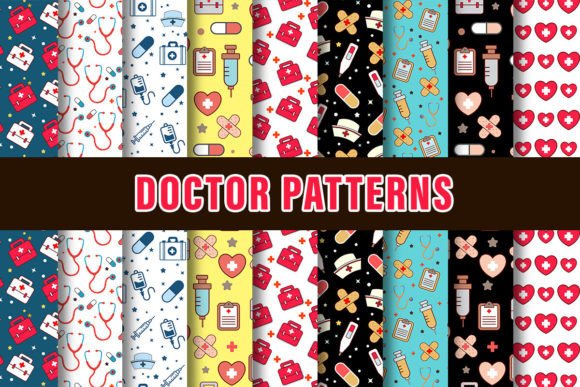
The first impression of this asset pack is distinctively professional yet approachable. It does not lean into the chaotic or overly childish tropes sometimes seen in medical-themed graphics. Instead, it offers a clean, organized visual personality that appeals to a specific niche: healthcare professionals, nursing students, medical administrators, and parents of children in healthcare careers. The mood is reassuring and crisp, balancing clinical precision with a touch of warmth. This makes it an ideal candidate for sellers targeting the "nurse life" or "medical student" demographics, which remain evergreen markets in the print-on-demand and printable sectors.
Real-World Application for Online Sellers
To truly evaluate a graphic design asset, you must imagine it in a live shop scenario. Let us say you are preparing a seasonal bundle for Etsy focused on graduation gifts for nursing schools. Doctor Digital Papers Patterns can serve as the foundational layer for a wide array of products. Because the patterns are versatile, they work exceptionally well as backgrounds for printable design projects such as planner stickers, study trackers, and clinical rotation logs.
For those of us using cutting machines, these patterns can be integrated into Cricut project workflows. While complex patterns are not always ideal for intricate cuts, they shine when used as fill patterns for larger shapes, such as tote bag inserts or notebook covers. If you are creating SVG design files, you can use these patterns to add depth to simple silhouettes of stethoscopes or heart monitors, transforming a basic vector into a textured, premium-looking graphic.
In the realm of sublimation design, this collection is particularly strong. Sublimation requires high-resolution images that can withstand heat transfer without losing clarity. These patterns provide the necessary density and color consistency for tumbler wraps, mouse pads, and lanyards. A common mistake new sellers make is using low-resolution clips for full-wrap items; however, if these files are provided at standard commercial resolutions, they will hold up well on curved surfaces like mugs and tumblers, where pattern continuity is crucial for a professional finish.
Enhancing Product Presentation and Brand Identity
Beyond the final product, these assets play a critical role in your marketing funnel. Your product mockup images are the first point of contact for potential buyers. Using Doctor Digital Papers Patterns in your listing photos can create a cohesive brand identity. For example, if you are selling a Canva template for medical office forms, using these patterns as the background in your thumbnail images signals immediately what the niche is. This improves your click-through rate by attracting the right audience while filtering out those who are not interested in medical themes.
Visual hierarchy is key in social media graphics and promotional visuals. When you post about your new digital download on Instagram or Pinterest, having a consistent set of background patterns helps establish recognition. Followers begin to associate that specific aesthetic with your shop. This is a subtle but powerful form of small business branding. It tells customers that you are not just reselling random clipart, but that you have curated a thoughtful collection.
Strategic Placement and Cautionary Notes
While these patterns are versatile, they are not a one-size-fits-all solution. Understanding where to apply them is just as important as knowing how to use them. These designs work best in large product previews, themed bundles, and decorative layouts where the pattern can breathe. They are excellent for packaging design elements, such as the interior lining of gift boxes or the back of thank-you cards included with physical orders.
However, there are areas where you should exercise caution. Avoid using these patterns behind text-heavy templates unless you significantly reduce the opacity. In sticker design, especially for small die-cut stickers, intricate patterns can become muddy when printed at a small scale. If the details are too fine, they may not print clearly on home printers, leading to customer complaints. Always test print colors and verify PNG design transparency before finalizing your files.
Additionally, be mindful of contrast. If you are creating a t-shirt design or a dark-themed mug design, ensure that the pattern colors stand out against the fabric or ceramic background. Weak contrast can make the design look washed out or unintentional. For Cricut or Silhouette users, remember that these are raster-based patterns, not cut lines. They should be used as print-then-cut elements or background fills, not as standalone cut paths.
Practical Seller Notes for Implementation
Before you upload your next design bundle to a creative marketplace, take a moment to run through a quality control checklist. First, test the design on real mockups. Does it look good on a white background? How does it appear on a dark navy scrub top? Preview it as a marketplace thumbnail to ensure it remains recognizable at a small size.
Pairing these patterns with the right typography is essential. Given the professional nature of the theme, serif fonts can add a touch of traditional authority, while clean sans serif fonts maintain a modern, clinical feel. Script fonts or handwritten fonts can soften the look for greeting cards or invitation templates, adding a personal touch to the otherwise structured patterns. Always confirm the commercial license terms provided with the asset. Ensure that your intended use—whether for POD items or direct digital product sales—is covered.
Finally, organize your files clearly for your customers. If you are bundling these patterns with other illustration elements or clipart, label them intuitively. A well-organized folder structure enhances the customer experience and reduces support queries. By treating Doctor Digital Papers Patterns as a strategic component of your product ecosystem rather than just a decorative add-on, you can create higher-value offerings that stand out in a competitive market.