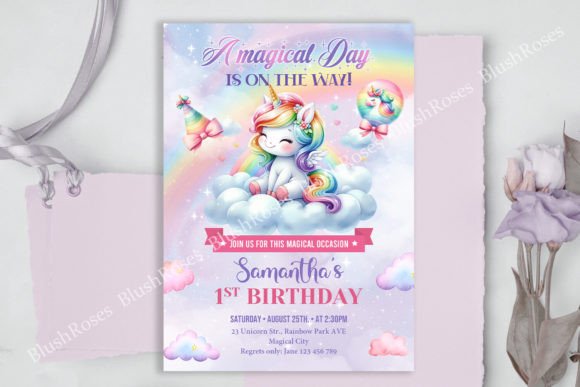
Reviewing the Cute Unicorn on a Cloud Birthday Invite
As an embroidery designer who has spent years digitizing motifs and troubleshooting machine errors, I approach every new machine embroidery design with a mix of curiosity and caution. We have all seen those overly complex files that look stunning on a screen but turn into a tangled mess of thread breaks and puckering on actual fabric. Recently, I evaluated the Cute Unicorn on a Cloud Birthday Invite to determine if it holds up under the needle for real-world commercial and personal projects. This is not just about aesthetics; it is about functionality, stitch integrity, and marketability for the modern craft entrepreneur.
First Impressions and Visual Personality
The initial visual impact of this design is undeniably cheerful. The motif features a whimsical unicorn resting on a soft cloud, creating a mood that is gentle, celebratory, and universally appealing. For designers, the layout is crucial. The composition balances negative space with filled areas effectively, which suggests that the digitizer considered how the thread would lay on the fabric. The theme leans heavily into nursery decor and children’s apparel, making it a strong candidate for baby showers, first birthdays, and spring-themed collections.
What stands out immediately is the clarity of the shapes. In embroidery, vague outlines often translate to muddy stitching. Here, the separation between the unicorn’s mane, the horn, and the cloud base appears distinct. This distinction is vital when working with thread colors that are similar in value. If you are planning to use pastel palettes, which are common for this aesthetic, having clear boundaries prevents the design from looking like a single blob of color once stitched out.
Real-World Application: From Screen to Stitch
To truly test a design, you must imagine it on a physical product. I visualized this motif on a few different substrates to gauge its versatility. For a custom apparel project, such as a toddler’s sweatshirt, the design sits well on the left chest or centered on the back. The scale seems appropriate for a standard 4x4 or 5x7 hoop, though you must verify the specific dimensions in your software before loading the embroidery file.
I also considered its potential as a tote bag design. Canvas is a sturdy fabric that handles fill stitches well, but it requires proper tension. The cloud element, likely utilizing a fill stitch for softness, would provide a nice textural contrast against the woven canvas. However, for a personalized gift like a burp cloth or baby blanket, you need to be mindful of the backing. Soft minky or fleece fabrics can sink into the stitches if the density is too high, so a cut-away stabilizer is non-negotiable here to maintain the shape of the unicorn’s features.
For Etsy sellers and small shop owners, this design fits perfectly into the "printable mockup" and digital product ecosystem. You can create compelling previews by placing the stitched design on lifestyle images of nursery walls or gift boxes. This helps buyers visualize the finished product before purchasing, increasing conversion rates for your craft business.
Navigating Technical Challenges
While the design is charming, there are areas where caution is required. Any design with fine details, such as the unicorn’s eye or the tip of the horn, risks getting lost if the stitch density is not optimized for the fabric type. On textured fabrics like terry cloth or waffle knit, small details can disappear. I recommend running a test stitch on scrap fabric that matches your final project material. This allows you to adjust pull compensation and check for registration issues.
Another critical consideration is the choice of stitch types. If the cloud uses a dense satin stitch border, it may cause puckering on thin or stretchy fabrics. A running stitch outline might be safer for delicate materials. Additionally, if you are applying this to curved surfaces like caps or hats, the horizontal width of the cloud needs to be checked against the curvature of the cap buckram. Distortion is common in wide designs on rounded surfaces, so scaling down slightly might preserve the integrity of the image.
Dark fabrics present another challenge. If you plan to offer this as a holiday embroidery option on navy or black garments, you will need to ensure the thread colors have enough contrast. A white or light yellow thread for the cloud will pop, but the unicorn’s body might need a brighter hue to stand out. Always test your color combinations in black and white mockups first to judge value contrast independently of hue.
Commercial Viability and Brand Consistency
For those using this in commercial embroidery, consistency is key. This design contributes to a cohesive brand identity if your shop specializes in whimsical, child-friendly items. It enhances the perceived value of a handmade product because it looks professional and intentional. Customers associate clean, well-digitized embroidery with quality, which builds trust and encourages repeat business.
However, always confirm the licensing terms. While many designs are sold for commercial use, some restrictions apply to mass production or digital resale. Ensure you are compliant before listing Etsy seller items or boutique products. Using a verified digital embroidery file protects your business from legal issues and supports the original artist.
Practical Designer Notes
Before you commit to a full production run, keep these practical tips in mind:
- Test on Scrap Fabric: Never skip the test stitch. Use the same fabric and stabilizer combination you plan to use for the final item.
- Check Thread Contrast: Ensure your thread colors stand out against the fabric background, especially for small details.
- Review Stitch Density: High density can cause stiffness; low density may show the fabric underneath. Find the balance for your specific material.
- Confirm Hoop Size: Verify that the design fits within your machine’s maximum hoop area without resizing disproportionately.
- Inspect Small Details: Zoom in on the digitized file to check for stray stitches or overlapping paths that could cause thread breaks.
- Use Proper Stabilizer: Match the stabilizer to the fabric weight. Cut-away for knits, tear-away for wovens.
- Verify Licensing: Read the terms of use carefully to ensure you can sell finished items made with this design.
In conclusion, the Cute Unicorn on a Cloud Birthday Invite is a versatile asset for designers who understand the technical nuances of embroidery. It offers strong visual appeal for nursery and children’s markets, provided you manage the technical execution with care. By paying attention to fabric choice, stabilizer selection, and stitch optimization, you can transform this digital asset into a high-quality embroidered patch, apparel feature, or home decor item that delights customers and elevates your brand.